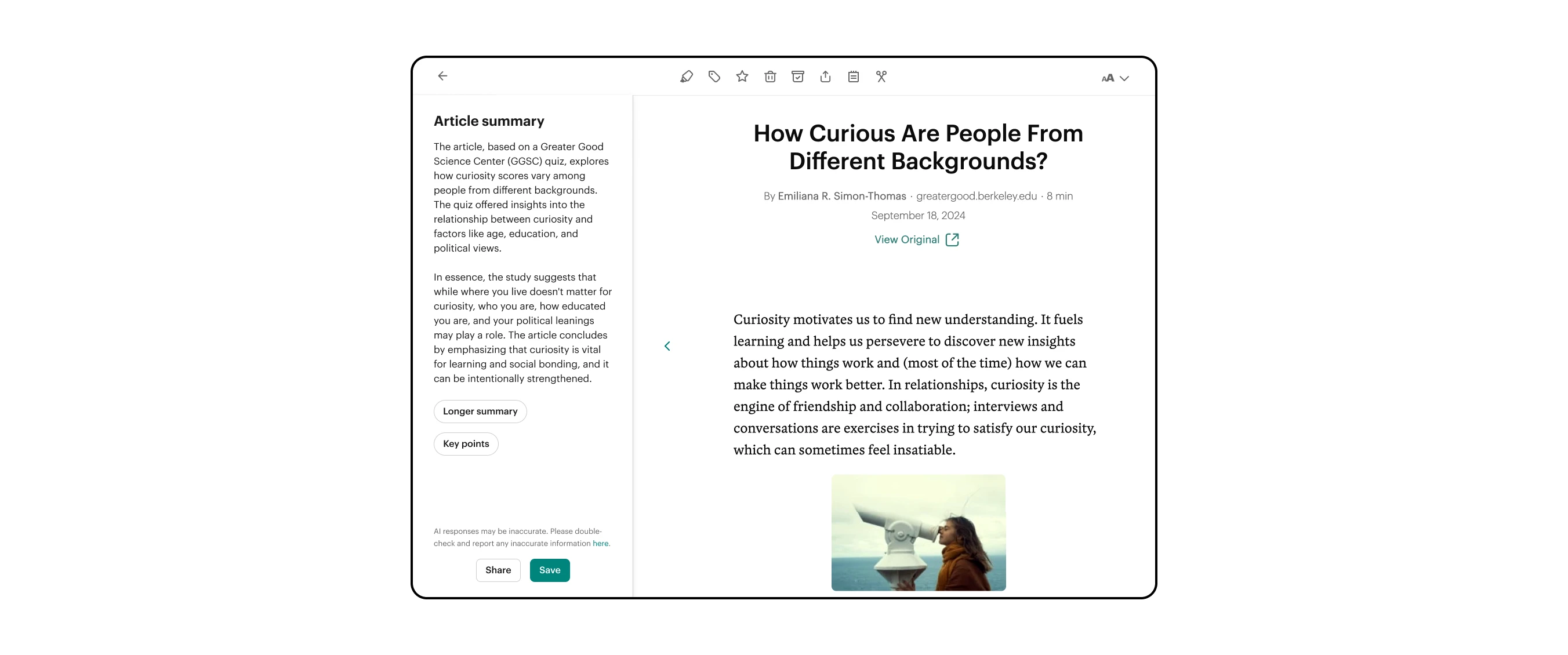
An example of a generated article summary within Pocket's Reader Mode
Lead Designer ◦ 2024
An example of a generated article summary within Pocket's Reader Mode
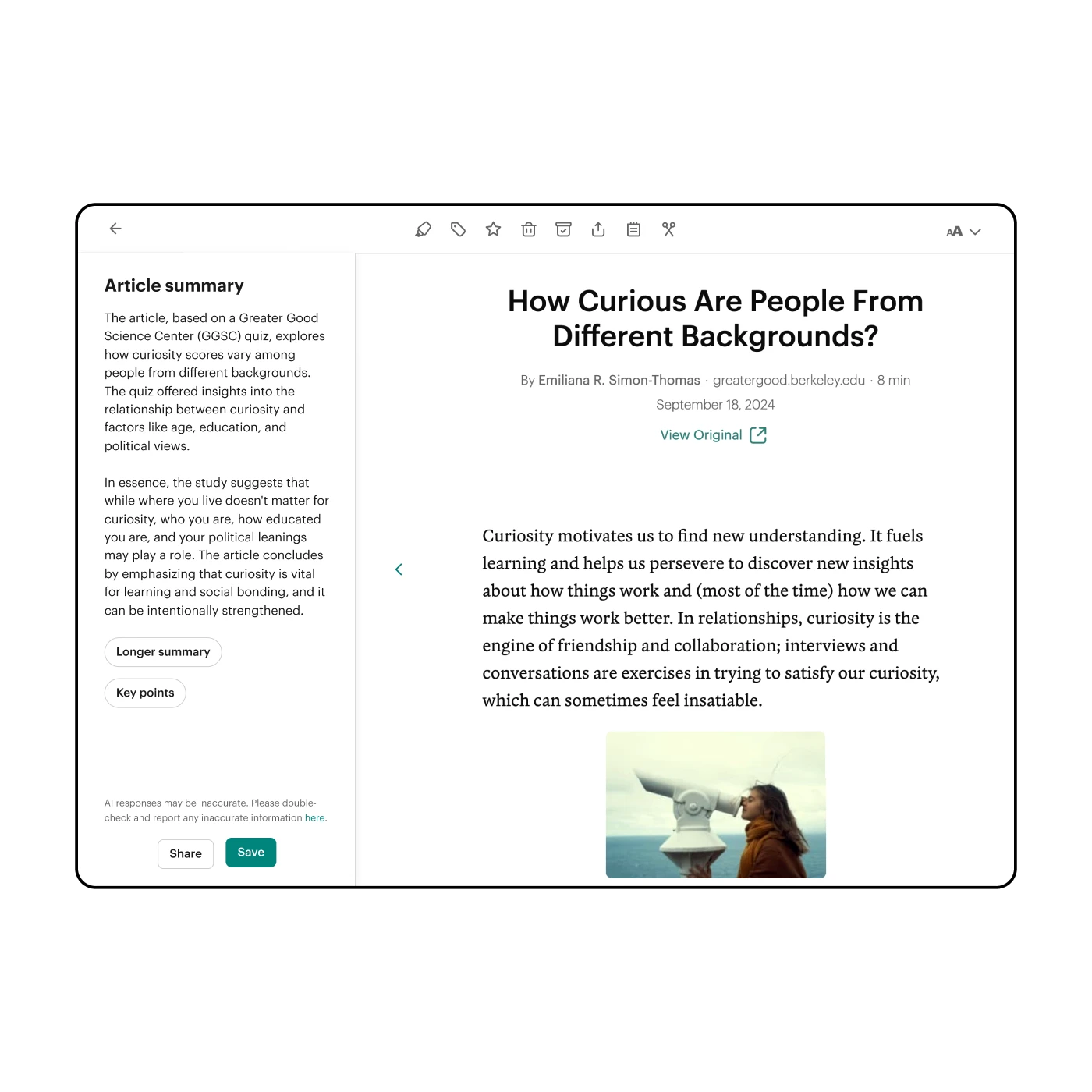
An example of a generated article summary within Pocket's Reader Mode
Like many companies, Mozilla was exploring ways of introducing AI functionality into their various products and services. On the Pocket team this presented an opportunity to modernize Pocket by offering more advanced features related to AI functionality like summarization, synthesis and "smart" organization of saved items. I worked with the Pocket team to identify areas for integration taking consideration of user needs, the product's larger roadmap and offerings from competitors within the bookmarking space.
The goals of this project were to:
A common criticism of AI is that it's a technology in search of purpose rather than a solution that addresses a specific user need or problem. Knowing this, I wanted to focus on potential aspects AI that would feel like an extension of what Pocket already offers. The first step was to take an initial pass at concepts, which could then later be iterated on as we facilitated further research.
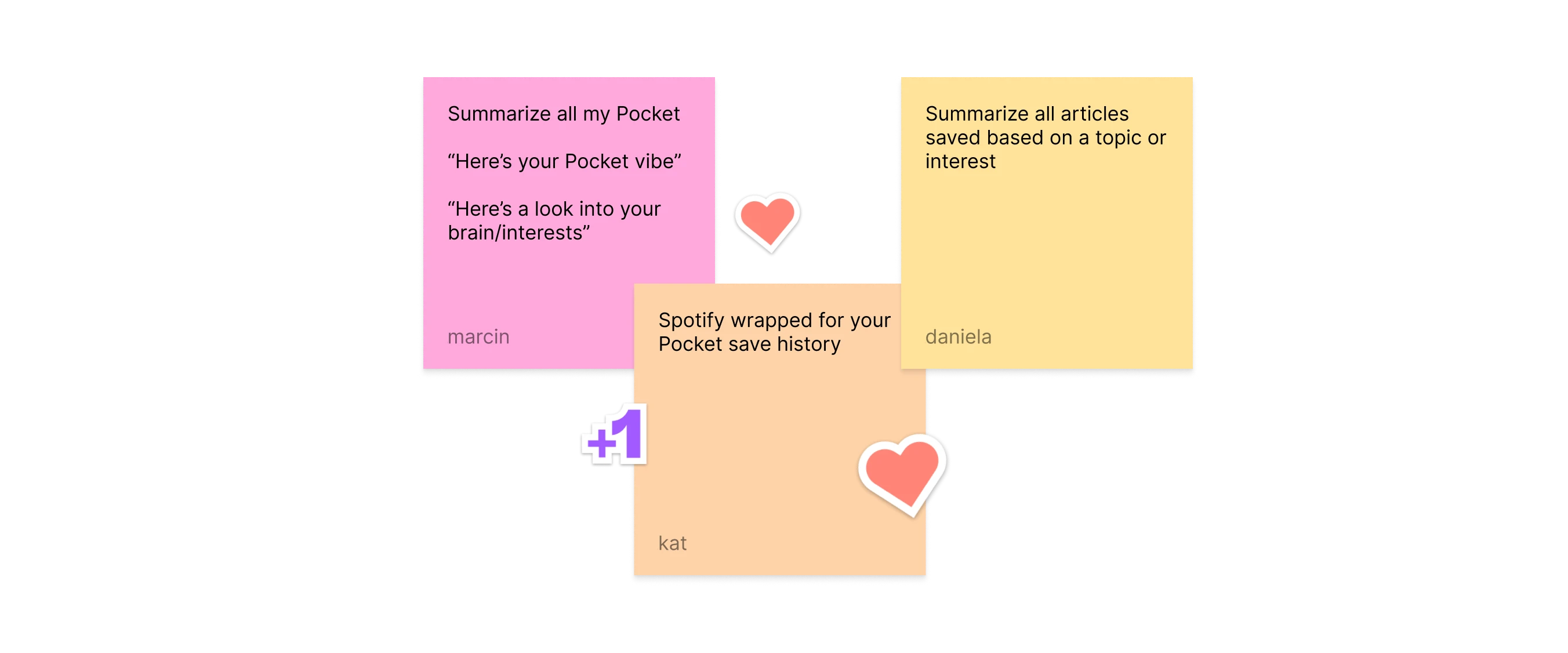
Figjam sticky notes from one of the brainstorming sessions
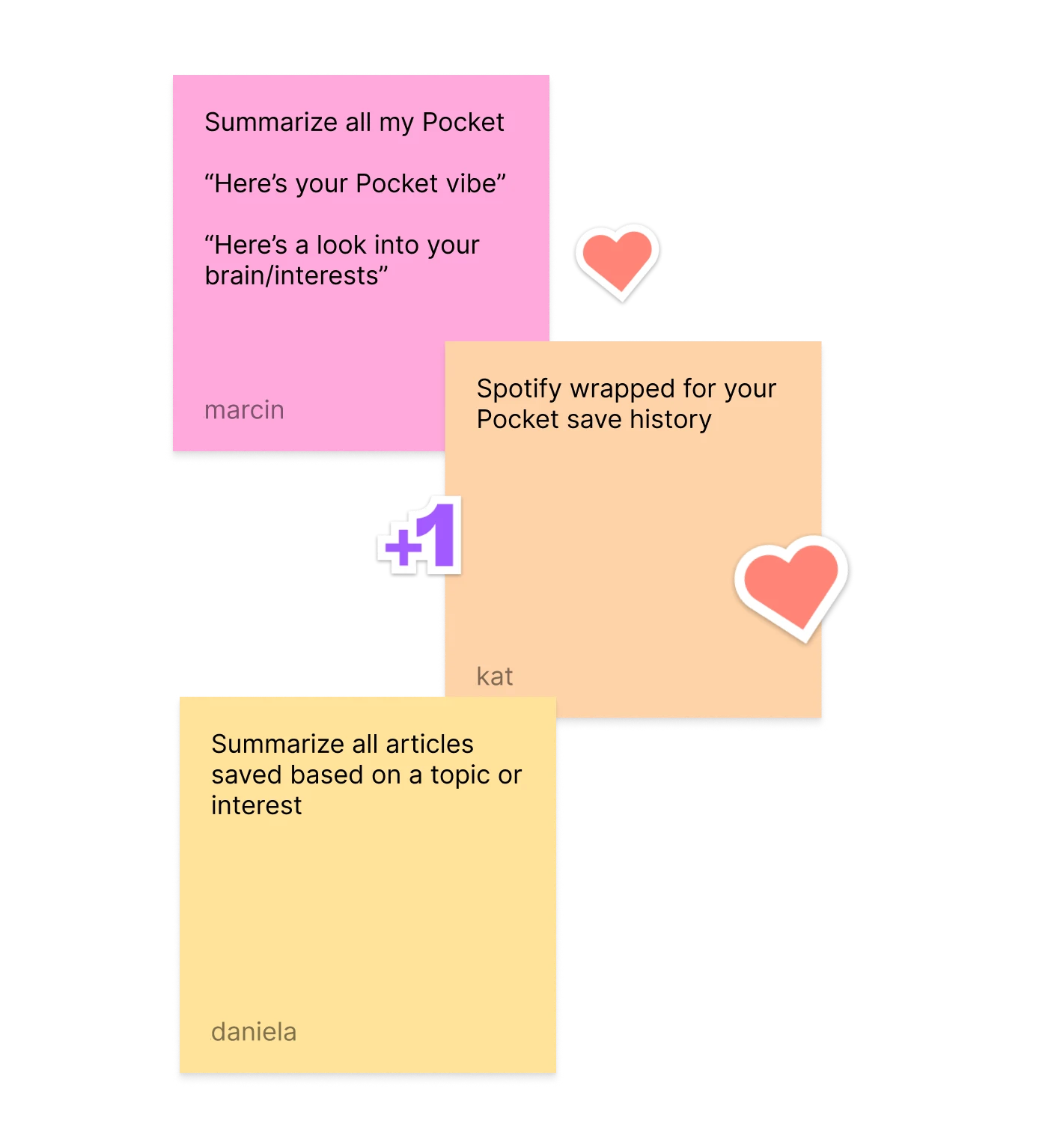
Figjam sticky notes from one of the brainstorming sessions
I facilitated a couple brainstorming sessions in Figjam where we discussed potential ideas for AI features within Pocket. The format was freeform ideation, then categorization of ideas into themes, and then voting on themes. The top ideas would become wireframed concepts that could be used for user feedback. We also discussed these concepts in terms of user impact, UX effort, and eng effort.
The five concepts we landed on were:
My manager at the time, Andrew, suggested using the opportunity solution tree format (popularized by Teresa Torres) to distill these concepts into activities, steps, and details. This would help me visualize which screens to wireframe in order to communicate each concept effectively for research.
Note: The following screens show the mocked-up version of these concepts rather than the wireframes I used for testing.
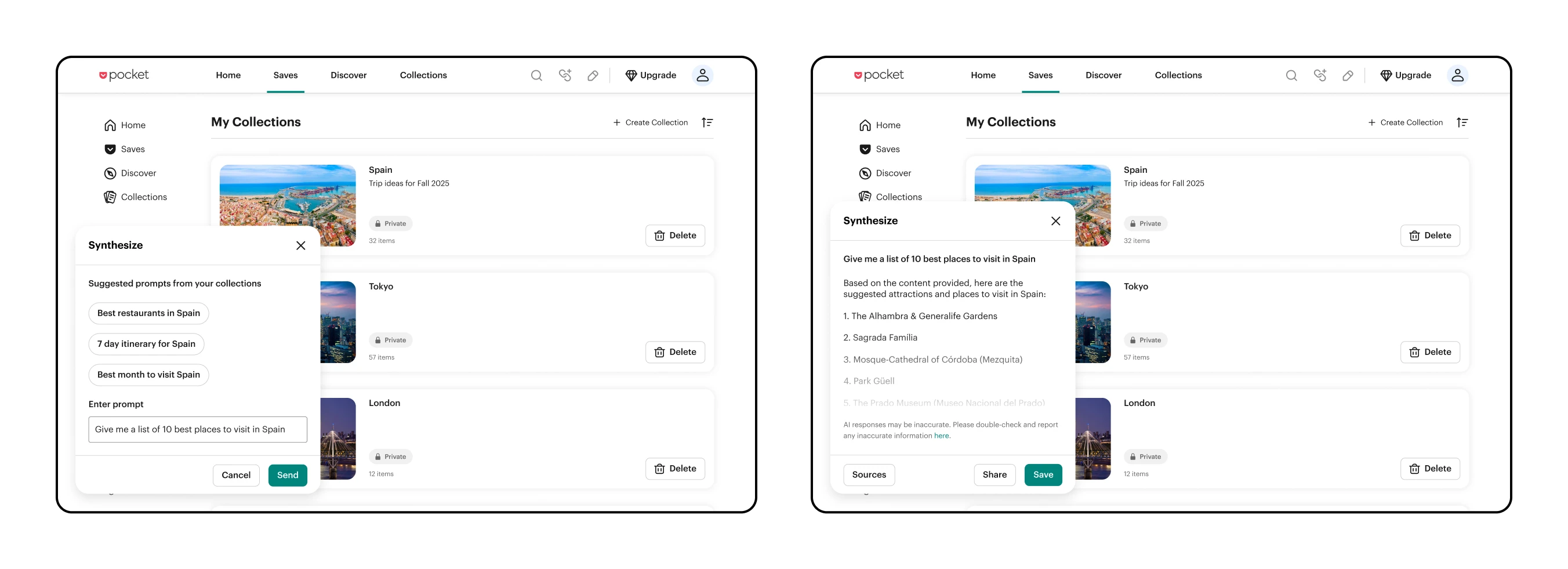
An example of an AI widget prompting synthesis based on a saved collection in Pocket
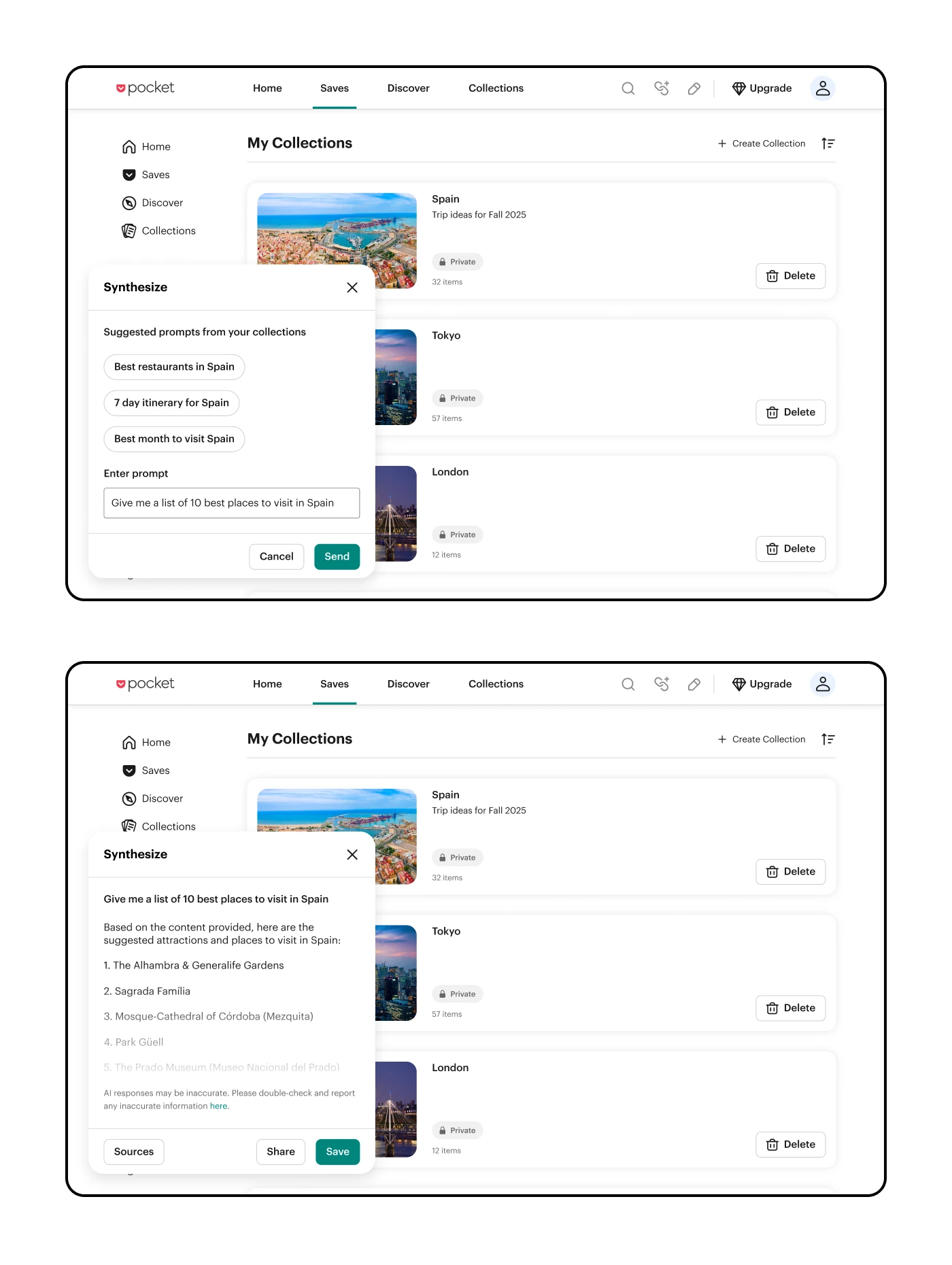
An example of an AI widget prompting synthesis based on a saved collection in Pocket
Probably the most common way of integrating AI is utilizing summarization functionality. This makes sense in the realm of Pocket, especially in Reader Mode and the display of an individual article.
Synthesis within Pocket logically fit into "Saves" and using AI to find relationships between multiple items. Of course, this was thinking more conceptually and we would realistically would have to determine how the limitations of the technology align with user's expectations.
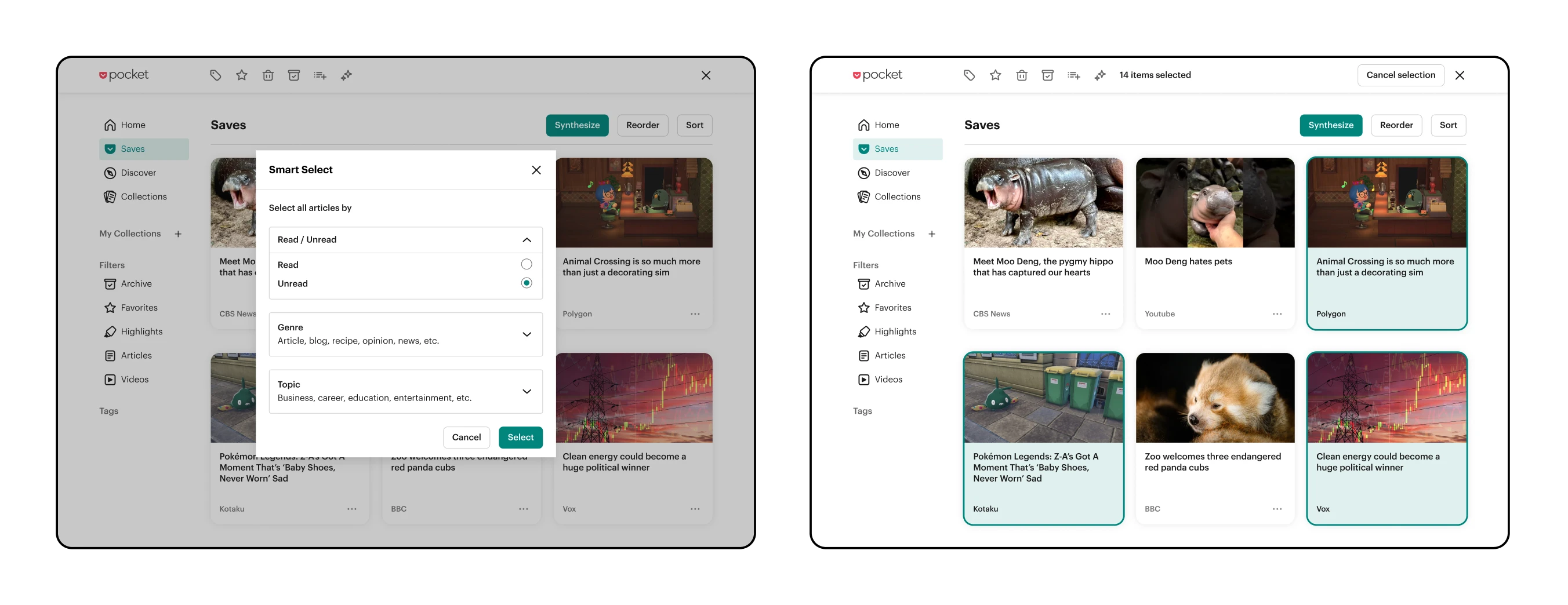
An example of how smart selection can be used in Pocket saves to select items that have an "unread" status
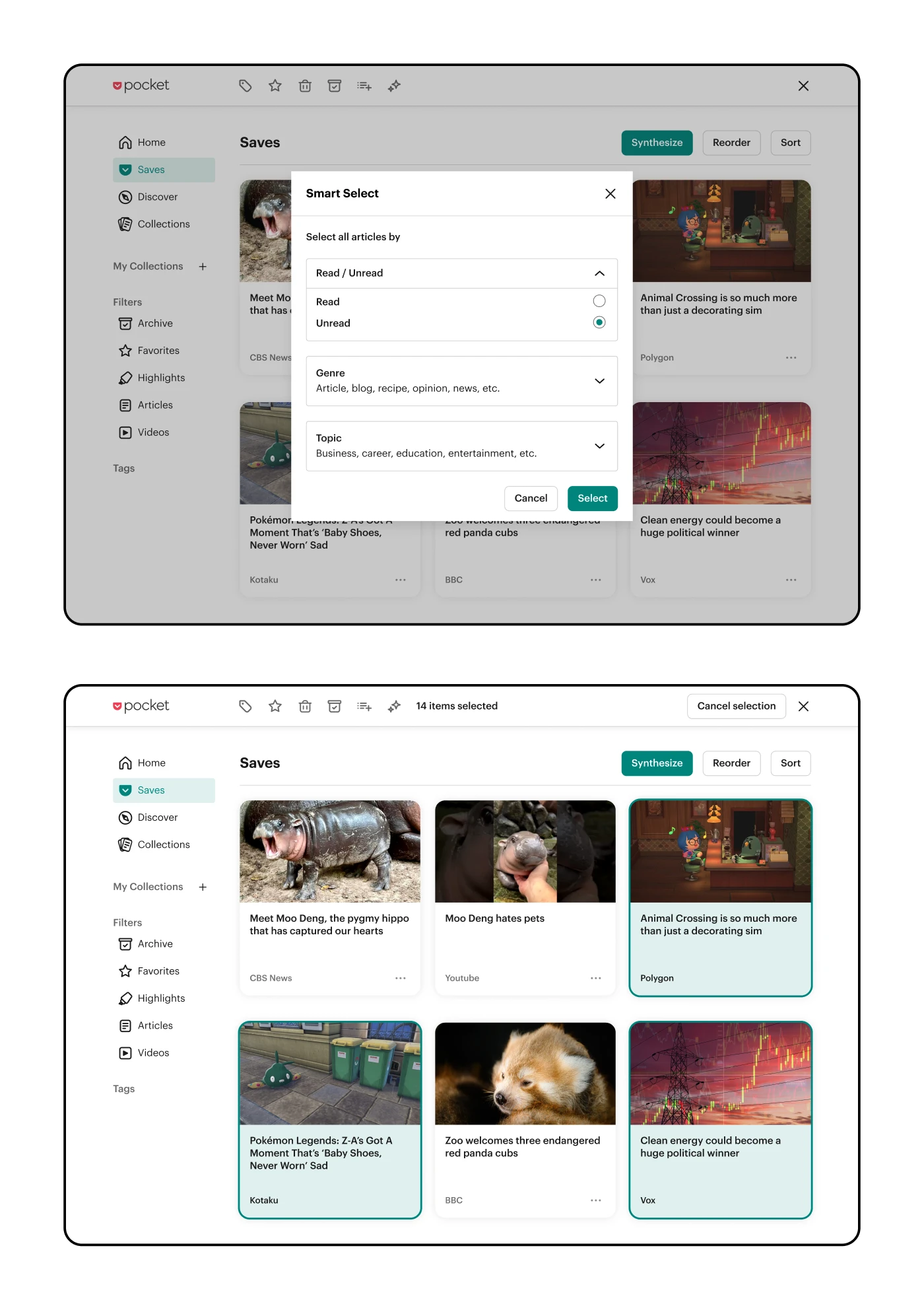
An example of how smart selection can be used in Pocket saves to select items that have an "unread" status
Theoretically we could also use ML to identify items depending to an user's preferences, for example selecting someone's "unread" items. It could also mean smart suggestions for grouping information into collections or how to tag an item for more effective labeling.
Other ideas for organization included smart detection of duplicate content and/or broken URLs. These ideas weren't included in the wireframed concepts but were poised as follow-up questions to each person during the research sessions.
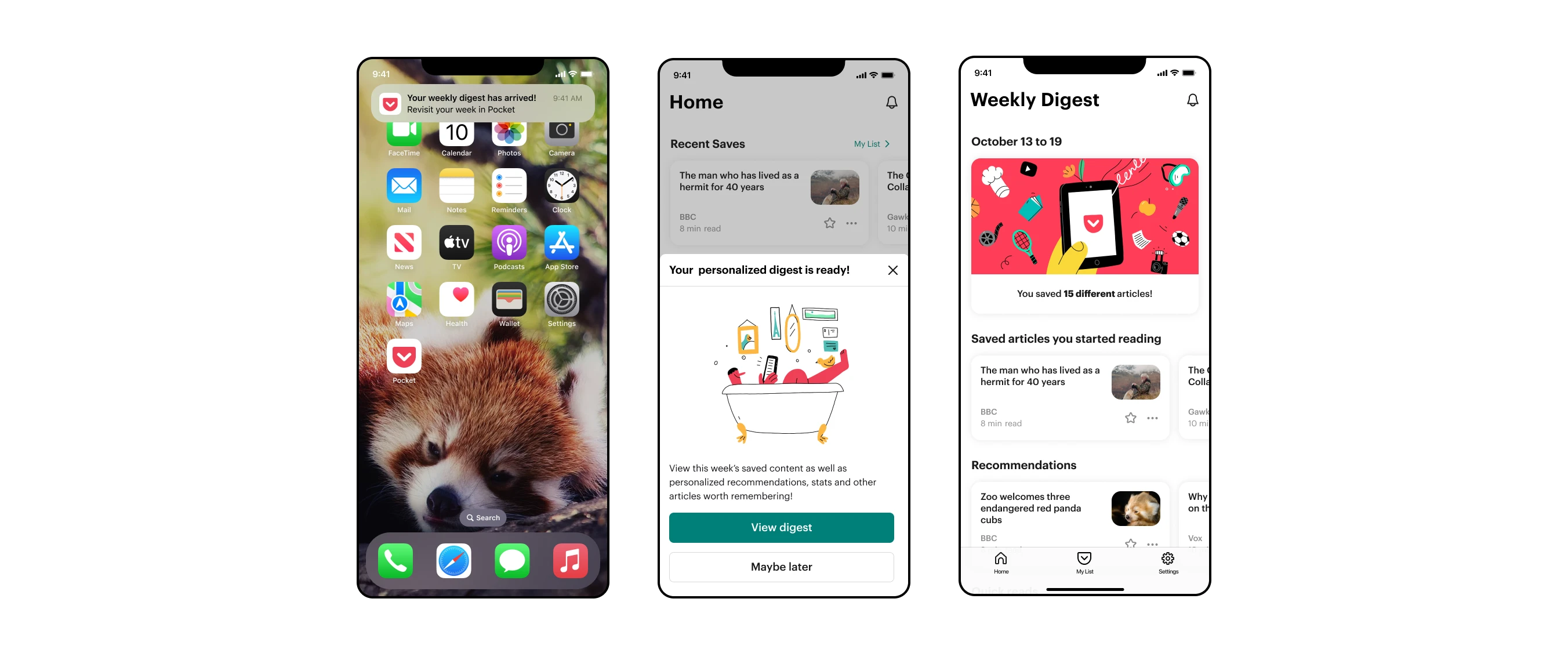
An example flow showing an user notified of their Pocket weekly digest / viewing the digest in Pocket
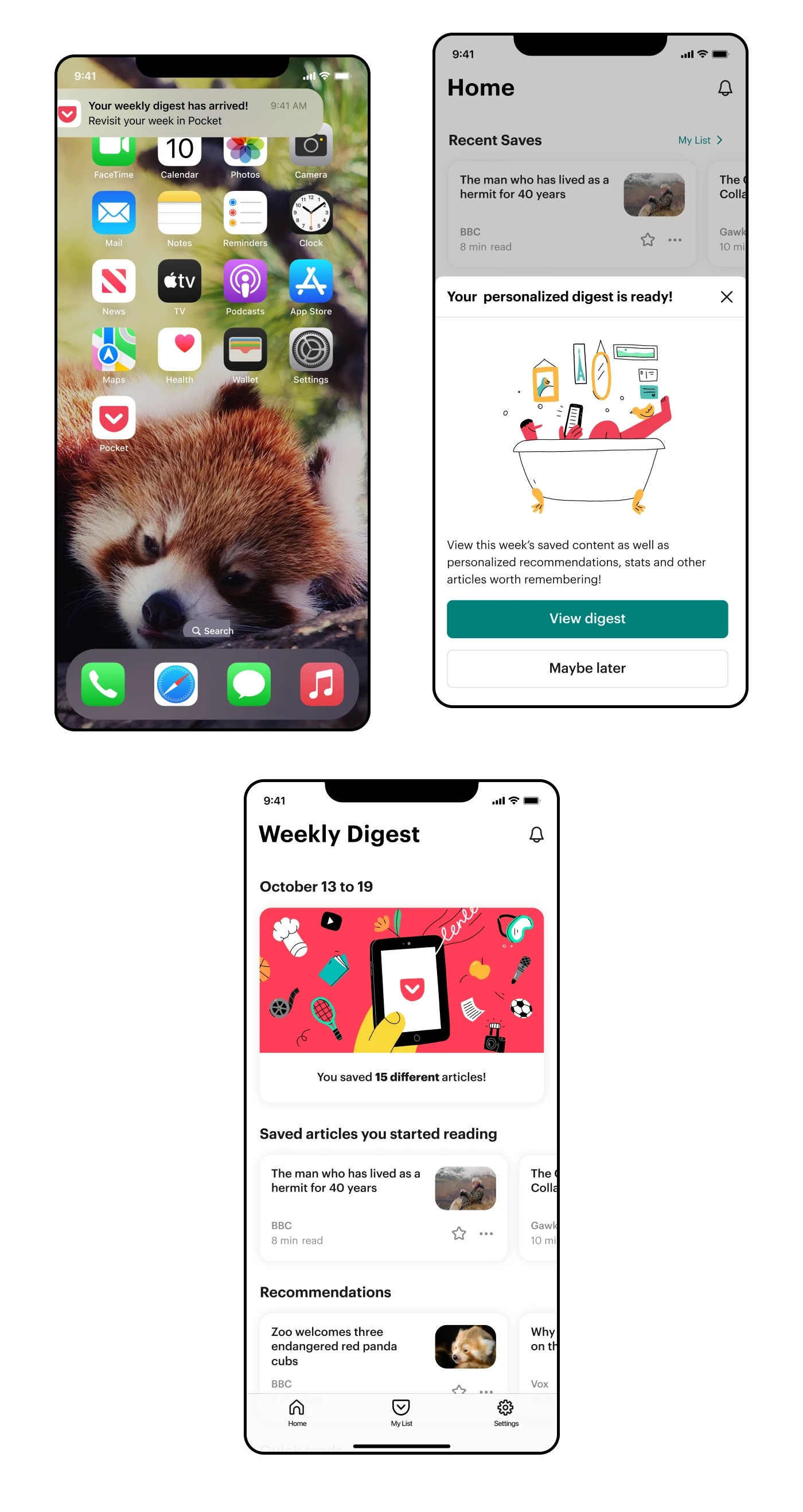
An example flow showing an user notified of their Pocket weekly digest / viewing the digest in Pocket
The idea of a weekly digest or weekly summarization of a Pocket user's engagement was actually inspired by a past project. Previously it had been implemented in the form of a weekly newsletter. For unexplained reasons, it was shut down despite being popular with users and having positive engagement metrics.
I considered this new version of a weekly digest from a mobile-first perspective that would leverage platform notifications for iOS and Android. However, this would present some challenges as we knew many Pocket users have notifications turned off.
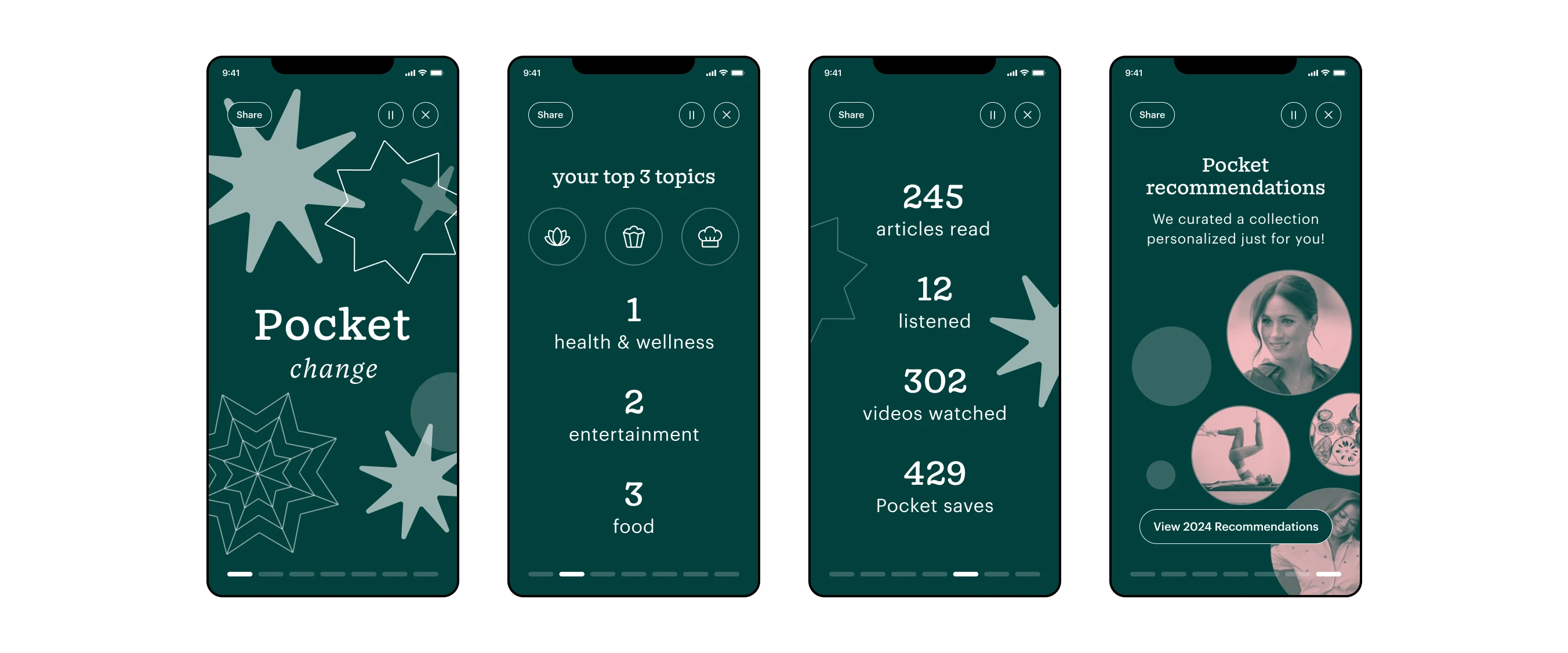
Example mocks of the "Pocket Change" concept showing different types of engagement information and recommended content
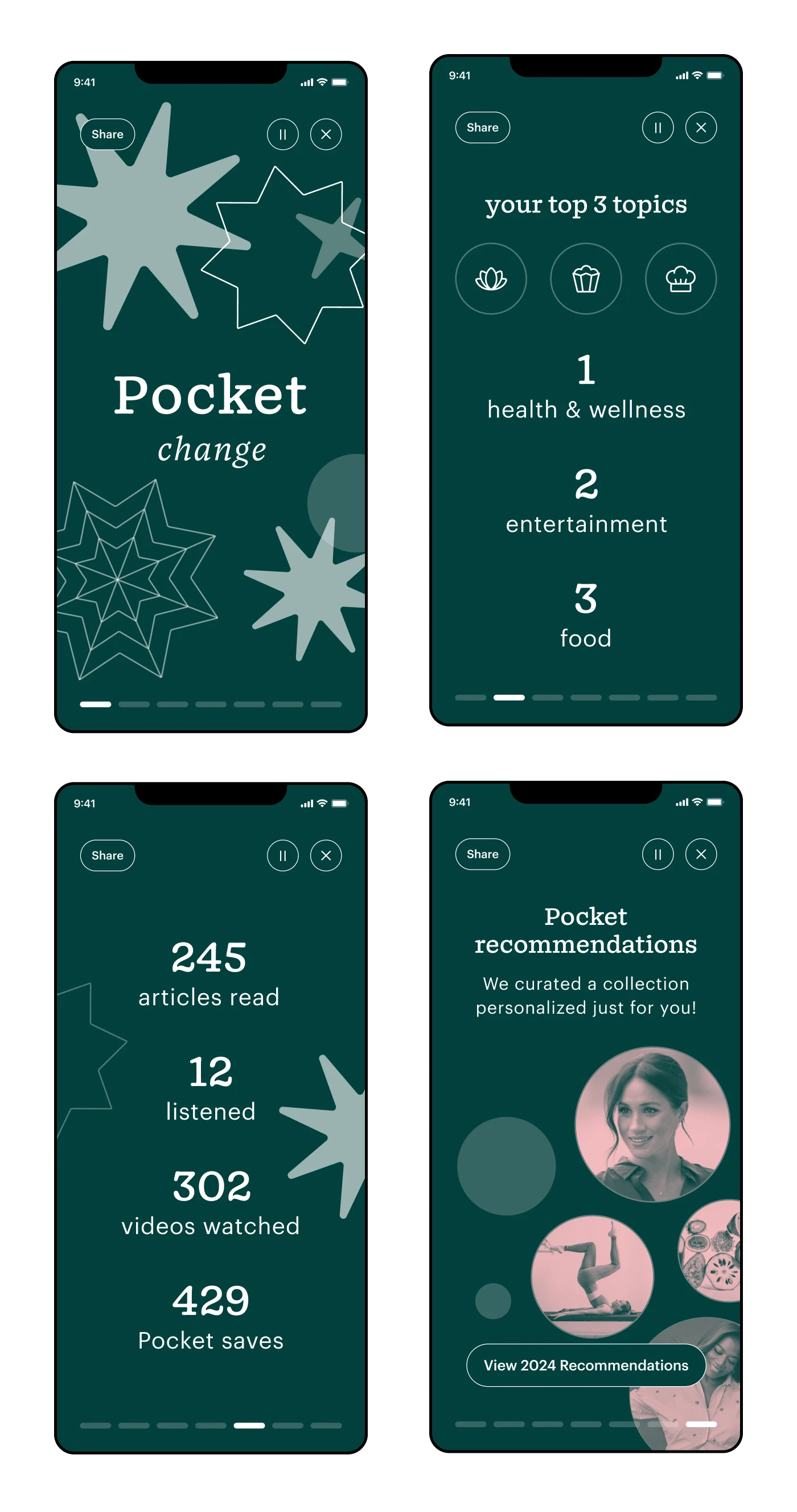
Example mocks of the "Pocket Change" concept showing different types of engagement information and recommended content
The last idea was an "End of the Year" digest inspired by Spotify's popular "Spotify Unwrapped" feature but reimagined for Pocket. The idea was to infuse more "delight" into the Pocket experience while building more of a "social" surface that could be further expanded on. The digest itself would be a mix of engagement stats, personalized recommendations and social media features.
"Pocket Change" is a name I came up for the purposes of the mock-up and was never made official.. Just something silly :)
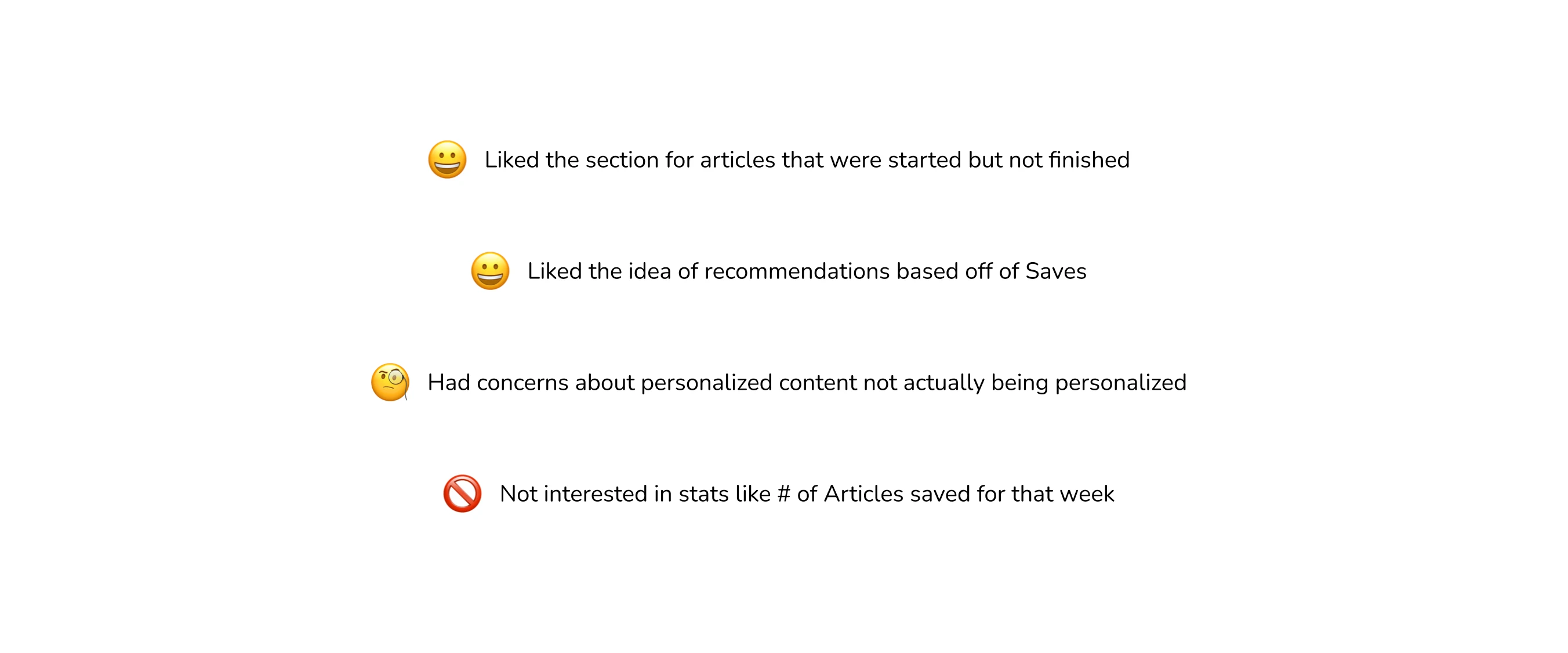
Notes from one of the UserTesting research sessions
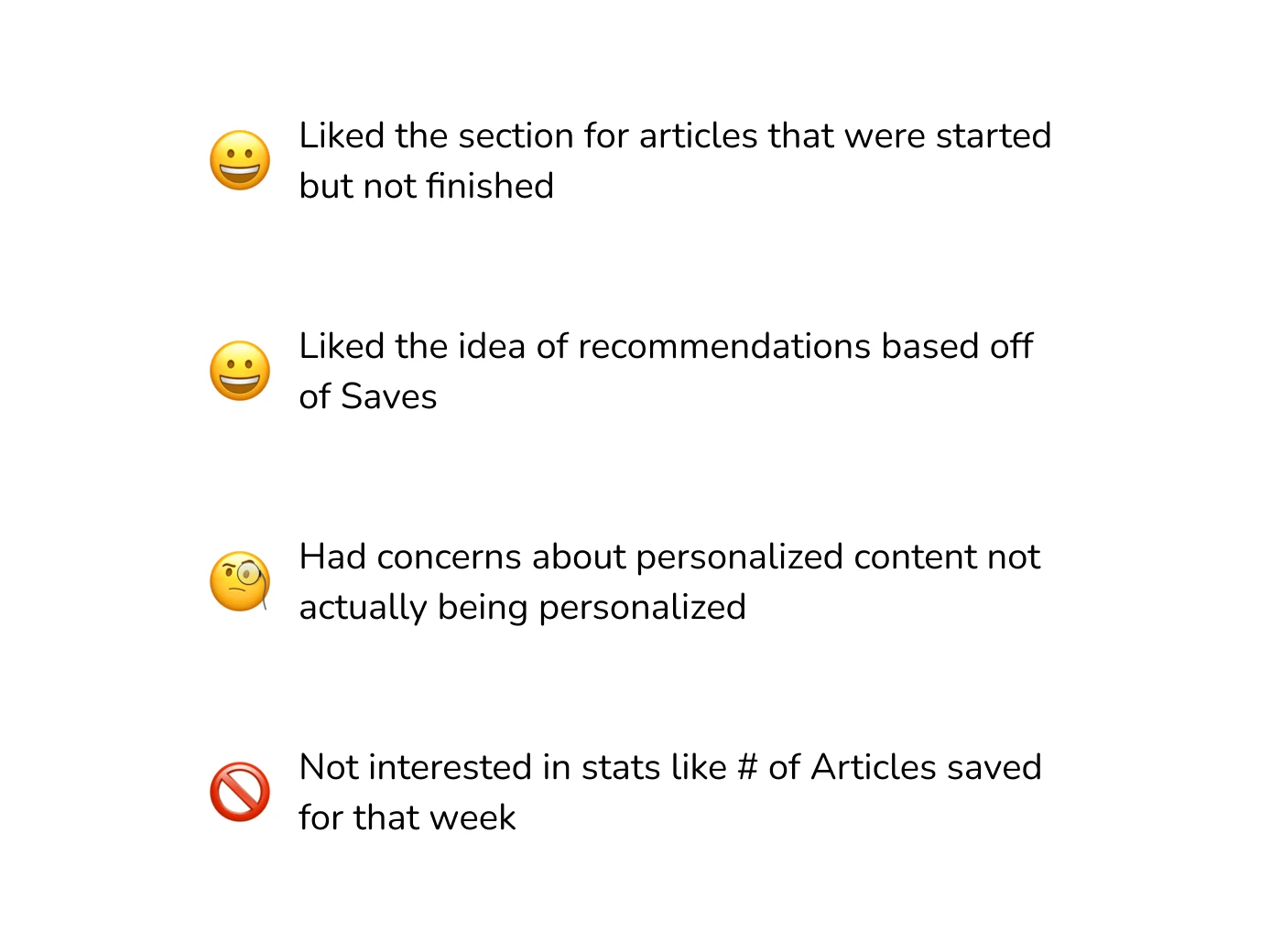
Notes from one of the UserTesting research sessions
Using UserTesting (the preferred platform at Mozilla), I spoke to 5 different Pocket users. I wrote the screening questionnaire and script of questions, seeking advice from the research team along the way. I later synthesized the feedback to produce takeaways and a final proposal.
For the most part, the concepts overall received positive feedback. I don't think they necessarily came across as "AI concepts" but were perceived as common sense features organic to Pocket. Each participant responded to different aspects of the concepts with social media features being the least popular across the board.
Soon after I completed the first round of research, the team was notified that we would need to pivot and I began work on Pocket Notes instead. If we were to integrate these AI concepts, we would have to consider the cost of prompts and how to effectively monetize an updated premium tier. We would also need a mechanism for reporting inaccuracies and other issues pertaining to generative AI.
There's increasing pressure to prioritize business needs as companies invest more and more heavily in AI. As a designer it's my responsibility to advocate for the users I design for and surface their concerns. This is where I think research can be especially helpful in aligning disparate opinions and building consensus based on facts rather than trends.
Shortly after Jamie joined, Pocket entered a period of strategic uncertainty that ultimately led to the product being shut down. During that time, Jamie demonstrated a level of professionalism and systems awareness that stood out. Rather than simply “powering through” dysfunction, she asked thoughtful questions about goals, constraints, and organizational tradeoffs, and helped the team make clearer, more user-centered decisions under real pressure. ...
I would happily hire Jamie again, and I strongly recommend her to teams looking for a senior product designer who combines strong craft, systems thinking, and the maturity to improve how work gets done — not just survive it.
— Nicole Zeltzer
senior software engineering manager